
Motorcycling in France: Routes, Rules, and Tips for Your Ride
Motorcycling in France: The best routes, road rules (including new lane-filtering regulations), tolls, gear, and tips for your ride.

France is one of Europe’s most diverse destinations for motorcyclists. Alpine switchbacks, the Mediterranean coast, the Pyrenees, the lavender fields of Provence, and the quiet roads of the Massif Central can all be found in a single country. Since 01 January 2025, motorcyclists have also been allowed to filter through stationary traffic nationwide. In this guide, you’ll find everything you need to know for your motorcycle trip in France.
Why France Is a Motorcycling Paradise
If you're wondering why so many riders love motorcycling in France, the answer is simple: few countries in Europe offer such a diverse range of landscapes in such a compact area, combined with a road network that feels made for riders who love twisty roads.France is the largest country in Western Europe by area. Outside the major urban regions around Paris, Lyon, and Marseille, it is surprisingly sparsely populated. That means miles of country roads with little traffic, winding mountain passes free from congestion, and villages where, after 125 miles of solo riding, you suddenly find yourself in a small bistro, being served a coffee while the owner asks about your route.
Then there's the geographical variety. One day, you're riding over mountain passes above 2,000 meters (6,500 ft) in the French Alps. The next, you're exploring the gorges of the Ardèche. A day later, you're cruising along the Atlantic coast. Few countries can offer that.
The Best Regions for Motorcycle Rides in France
We've grouped the top regions for motorcycle rides in France by what makes them special, from iconic mountain destinations to hidden gems you won't find on many other blogs.French Alps — Route des Grandes Alpes
The Route des Grandes Alpes is the ultimate motorcycling experience in France. Covering around 720 km (447 mi), it stretches from Lake Geneva to Menton on the Côte d'Azur, crossing 17 Alpine passes along the way, including the Col de l'Iseran (2,764 m / 9,068 ft, the highest paved mountain pass in Europe), the Col du Galibier, and the Col de la Bonette.Distance: approx. 720 km (447 mi)
Recommended duration: 4 to 6 days
Highlights: Col de l'Iseran, Col du Galibier, Col de la Bonette, Col d'Izoard
Best time to visit: mid-June to mid-September (many of the higher passes are often still closed before then)
If you only do one motorcycle trip in France in your lifetime, make it this one.
Pyrenees — Wild Mountain Roads with Less Traffic
The Pyrenees are the quieter, more rugged counterpart to the Alps. Stretching for around 430 km (267 mi) from the Atlantic Ocean to the Mediterranean Sea, they offer spectacular mountain scenery and legendary passes such as the Col du Tourmalet, Col d'Aubisque, and Col de Peyresourde, but with noticeably less traffic, especially in the shoulder seasons.If you'd like to ride iconic Tour de France climbs for yourself, this is the place to do it. Tip: The route can easily be combined with a detour through Spain or Andorra.
Learn more about the Pyrenees here
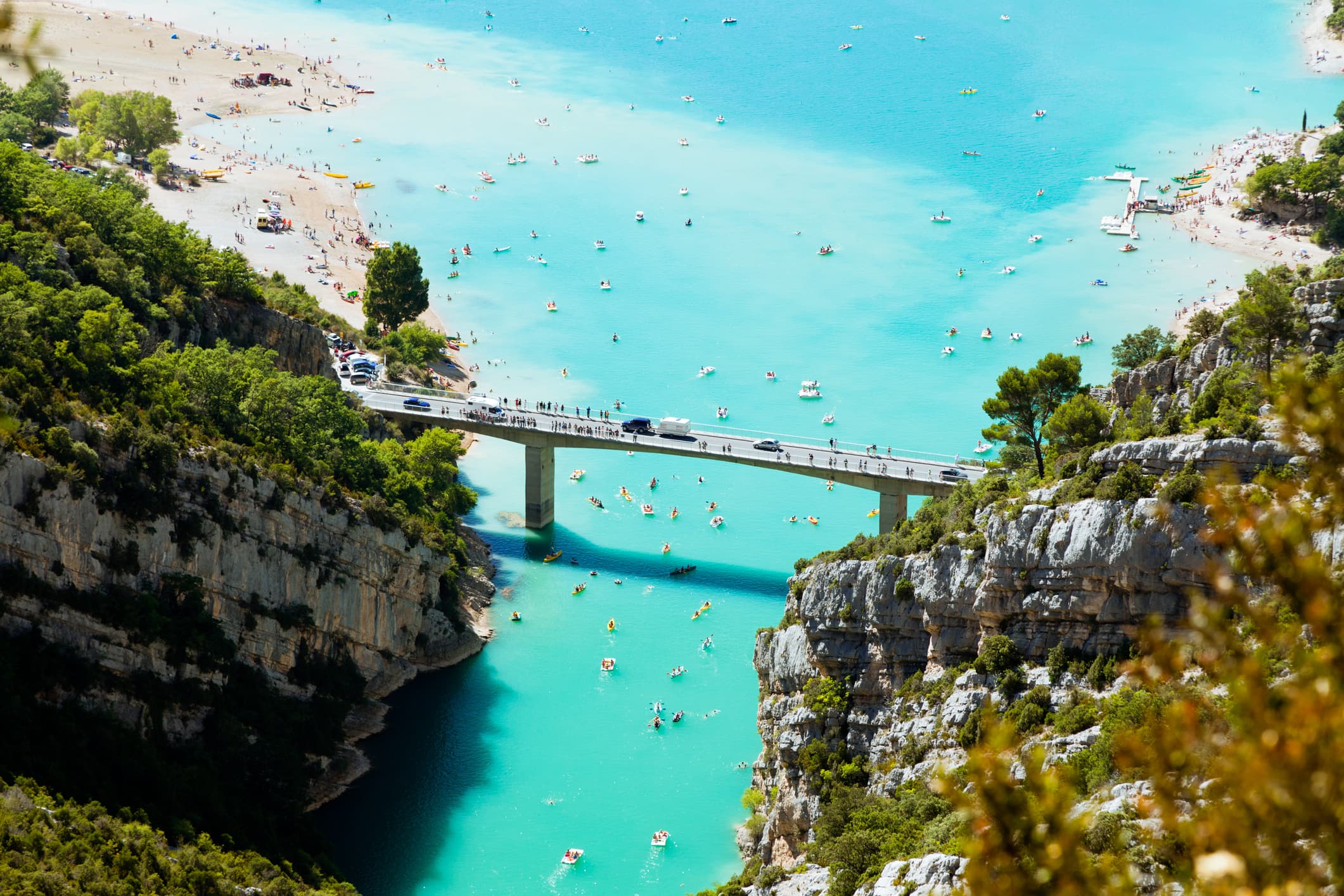
Provence & Côte d'Azur — Lavender, Gorges, and the Mediterranean
If your image of France includes lavender fields, sunflower-covered landscapes, and the sparkling Mediterranean Sea, Provence is exactly what you're looking for. For motorcyclists, three routes stand out in particular:Gorges du Verdon — Europe's answer to the Grand Canyon, with dramatic roads carved into the cliffs
Route Napoléon (RN 85) from Golfe-Juan to Grenoble — a historic route packed with twisty roads
The Corniches of the Côte d'Azur — three scenic coastal roads above Monaco with stunning views of the Mediterranean and luxury yachts
Cévennes & Massif Central — The Underrated Insider Tip
The Massif Central and the Cévennes are among the most underrated regions for motorcycle rides in France. Expect quiet country roads, high plateaus with sweeping views to the horizon, spectacular gorges such as the Gorges du Tarn, and the Viaduc de Millau as an architectural highlight.Perfect for anyone who wants to experience motorcycling in France away from the famous passes, and an excellent choice early in the season when many Alpine passes are still closed.
Vosges & Alsace — Perfect for a Long Weekend
The Vosges are one of France's most accessible riding destinations. The Route des Crêtes follows the main ridgelines for around 80 km (50 mi), offering sweeping views across the Rhine Valley to Germany's Black Forest, along with enough twisty roads to keep you smiling all weekend long.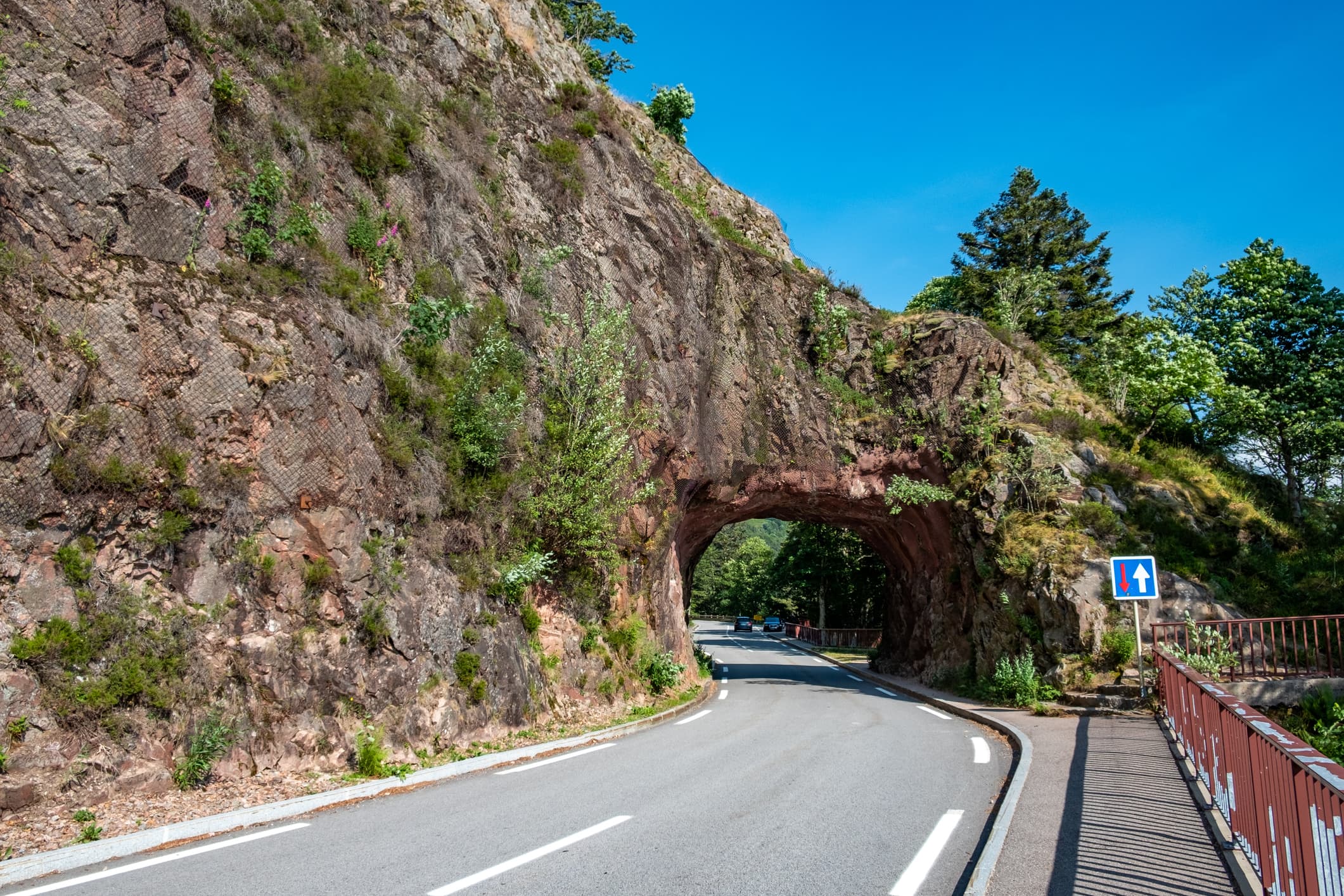
Corsica — Mountain Roads With Mediterranean Views
Strictly speaking an island, but very much part of France: Corsica is a self-contained paradise for motorcyclists. You arrive by ferry and from then on it’s 1,000 km (620 mi.) of nothing but hairpins, coastal roads, and mountain passes like the Col de Bavella. Plan at least seven to ten days; anything less doesn’t really do the island justice.Traffic Rules for Motorcyclists in France (Updated for 2026)
This is the part you should honestly read before setting off on your trip. Traffic fines in France can be expensive, and some rules differ from those in Germany and other European countries.Helmet Requirement and Reflective Stickers
Helmet use is mandatory for both riders and passengers. Only helmets certified under ECE standards 22.04, 22.05, or 22.06, or the French NF S72-305 standard, are permitted. So far, nothing unusual.The French exception: Your helmet must have reflective stickers attached on all four sides. That means one on the front, one on the back, and one on each side. This requirement is unique to France, and police have been enforcing it consistently in recent years. The stickers cost only a few euros and are available from most motorcycle dealers.
CE-Certified Gloves Required
Since November 20, 2016, both riders and passengers in France have been required to wear CE-certified motorcycle gloves. Fabric gloves or leather gloves without CE certification are not sufficient, no matter how sturdy they may look. Fines start at €68 and may also result in penalty points.Carry a High-Visibility Vest
Since 2016, motorcyclists in France have also been required to carry a high-visibility vest. You do not need to wear it while riding. It is only required in the event of a breakdown or accident. The vest must be easily accessible, so don't bury it at the bottom of your top case. Failure to comply can result in fines of at least €90.Speed Limits
Here's a quick overview of the most important speed limits for motorcycles in France (in dry and wet conditions):- Urban areas: 50 km/h (31 mph)
- Rural roads (one lane in each direction, no central barrier): 80 km/h (50 mph)
- Rural roads with a central barrier: 90 km/h (56 mph) / 80 km/h (50 mph)
- Expressways: 110 km/h (68 mph) / 100 km/h (62 mph)
- Highways: 130 km/h (81 mph) / 110 km/h (68 mph)
Newly licensed riders with less than three years of riding experience are subject to lower speed limits: 110 km/h (68 mph) on motorways, 100 km/h (62 mph) on expressways, and 80 km/h (50 mph) on rural roads.
Blood Alcohol Limit
In France, the legal blood alcohol limit is 0.5‰. For newly licensed riders during their first three years, the limit is just 0.2‰. For reference, France has abolished the requirement to carry a personal breathalyzer, and the related fine had already been suspended before that. Still, carrying one won't hurt.Lane Filtering Legal Since 2025 — Finally
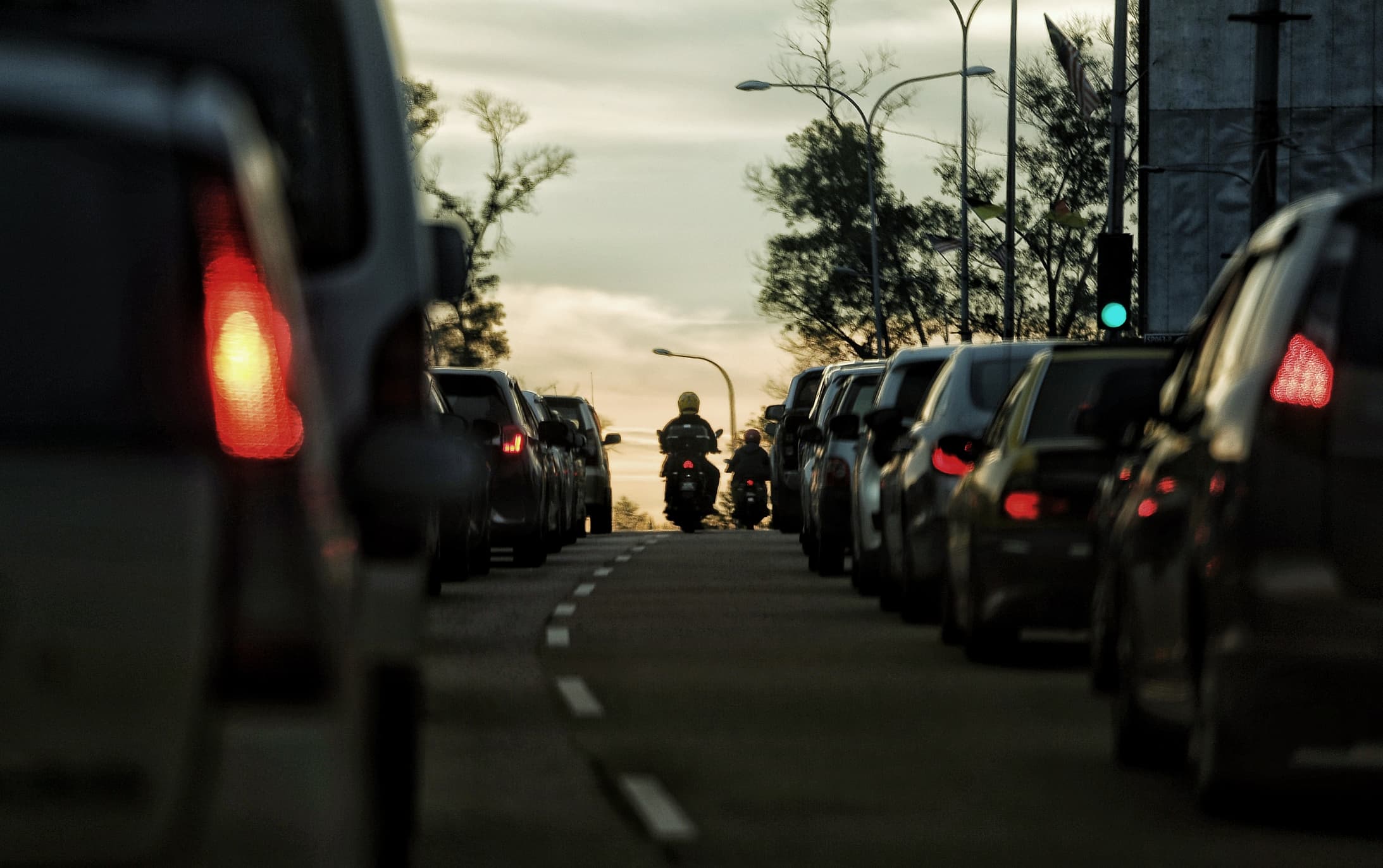
This is the most important change for 2025/2026: Since 01 January 2025, lane filtering (French: circulation inter-files) has been legal throughout France. Previously, it was only permitted as part of a pilot program in selected regions.However, there are clear rules. Lane filtering is only permitted:
- on motorways and multi-lane roads with separated carriageways
- where the speed limit is at least 70 km/h (43 mph)
- only between the two leftmost lanes
- at a maximum speed of 50 km/h (30 mph) when traffic is moving
- at a maximum speed of 30 km/h (20 mph) when traffic is stationary
It remains prohibited on regular rural roads, one-way streets, and in urban areas. Violations can result in a €135 fine and three penalty points.
Tolls in France: What Motorcyclists Need to Know
Most French motorways are subject to tolls (péage). For a route such as Calais to Marseille, toll charges can quickly add up to €70-90. Motorcycles, however, fall into a lower toll category than cars, and riders typically pay around 30-40% less.Important to know:
- During the day, staffed toll booths are usually open, and you'll be correctly classified as a motorcycle.
- At night, toll booths are often fully automated and may not recognize vehicle types, meaning you'll be charged the full car rate.
- Credit cards are usually the quickest way through toll booths, so there's no need to search for cash.
- Many larger toll plazas have dedicated motorcycle lanes, marked with a motorcycle symbol.
Tip: If you're planning to enjoy the scenery anyway, choose the "no highway" routing profile in calimoto. You'll not only save on tolls, but you'll probably end up taking the more scenic route as well.
Best Time to Ride a Motorcycle in France
The ideal riding season depends heavily on the region:- French Alps / Pyrenees: Mid-June to mid-September. Before then, many passes are closed due to snow; afterward, nights get cold quickly.
- Provence & Côte d’Azur: April to October. In high summer (July/August) it’s hot and crowded — May, June, and September are ideal.
- Vosges & Alsace: April to October. Also beautiful in fall with the changing leaves.
- Corsica: May, June, and September as well as October. In high summer the island is hot and very crowded with tourists.
- Cévennes & Massif Central: April to October, especially lovely in late spring (wildflowers) and early fall.
Packing List & Required Documents
Always carry the following:- National ID card or passport
- Driver's license (an EU driver's license is sufficient; an international driving permit is not required)
- Vehicle registration certificate
- Proof of insurance (the "Green Card" is recommended but no longer mandatory)
- High-visibility vest (stored within easy reach)
- CE-certified motorcycle gloves
- Helmet with reflective stickers (four in total)
Plan Your Ride with calimoto
When planning a motorcycle trip through France, the route itself is what matters most. Taking the highway directly from A to B means missing out on what makes riding in France so special.With calimoto, you can plan twisty rides instead of simply taking the fastest route. The app doesn't make the decisions for you, but it highlights routes that other riders have marked as the most beautiful. You can also exclude toll roads, highways, and unpaved roads if you prefer.
You'll also find ready-made rides for every region of France in the calimoto community's tour recommendations, which you can import directly into the app.
Conclusion
Motorcycling in France combines two things that rarely come together in equal measure: incredible variety, from the high Alps to the Mediterranean coast, and roads that seem made for riders, full of twists and turns, light traffic, and welcoming bistros and Relais Motards around every corner.Once you're familiar with a few French-specific rules, such as reflective helmet stickers, CE-certified gloves, and the new lane-filtering regulations, nothing stands between you and your next ride. Plan it with calimoto, find inspiration in the community, and experience for yourself what makes France a must-ride destination for motorcyclists.